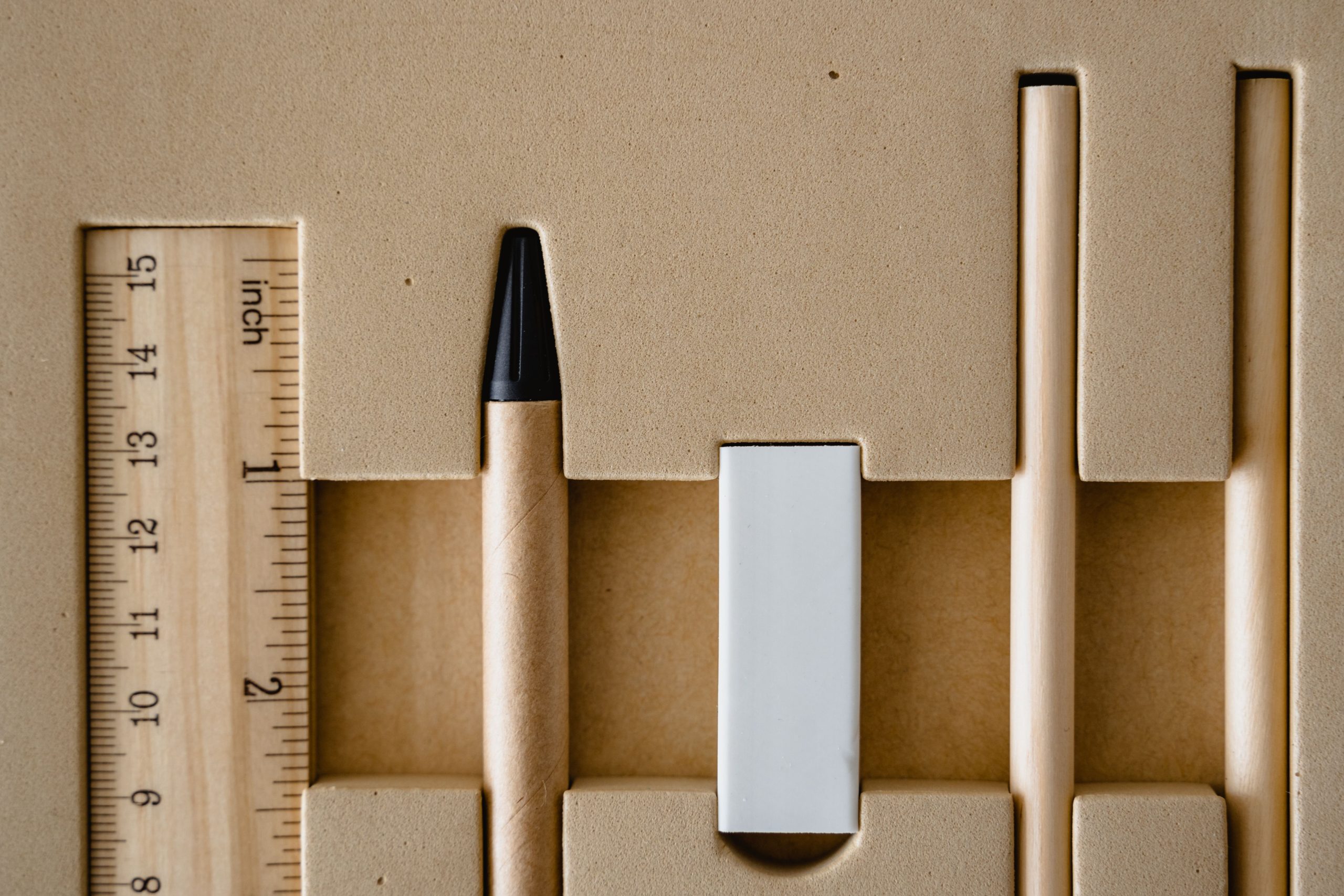
A ruler balanced on a pencil can show why one coin far from a pivot can balance two coins closer to it. The puzzle is useful for Malaysian lower-secondary pupils because it turns the words 투아스, fulkrum momen daya into something you can move and test. Start by predicting where to put the coins, then look for the position that actually balances. The aim is not to make a ruler wobble until it looks level, but to explain why one placement works better than the next.
Check where the ruler balances before adding coins
Use a rigid plastic ruler, a pencil, a little removable tape or putty and three matching coins or counters. Work at a low, clear table. Secure the pencil so it cannot roll but leave its upper surface free. Place the ruler across it and slide the ruler until it balances roughly level without coins. Mark the point directly above the pencil. The halfway mark is a sensible initial guess, but a ruler with a hole or a thicker end may balance slightly away from its marked centre.
The pencil marks the pivot: the place about which the ruler can turn. Measure every lever distance from that point. If the pivot is at the 15 cm mark and a coin is centred at the 20 cm mark, its distance is 5 cm, not 20 cm. Draw a small side-view diagram and underline the origin of the measurement. If your ruler is too short for the example, choose smaller distances while keeping the same ratio.
Make a prediction with one coin and two coins
Place two coins together on one side, with the centre of the stack 4 cm from the pivot. Where should one identical coin go on the opposite side? Near horizontal balance, the weights act vertically and the lever distances are horizontal. Two matching coins at 4 cm produce the same turning effect as one at 8 cm. One side tends to turn the ruler clockwise and the other anticlockwise. A balanced ruler needs those effects to cancel, not merely the same count on each side.
Put the single coin at the predicted position. Watch from the side and wait for any movement to settle. If it tilts, move the single coin a few millimetres at a time and record where balance is closest. Use a fixed tolerance, such as staying nearly level for a slow count of three without anyone touching it. Record both the calculated position and the observed one. If you quietly replace the observed reading with the predicted one, you lose the chance to explain why they differ.
Investigate an unexpected prediction
A classmate puts one coin at 8 cm and two at 6 cm. Which side should drop? The one-coin side has a turning effect proportional to eight; the two-coin side has a turning effect proportional to twelve. The two-coin side should drop first if the ruler started balanced. Now ask what happens if both sides move 2 cm farther from the pivot. The results become ten and sixteen, not two equal values. Moving each side by the same distance changes the turning effects by different amounts when the weights differ.
A small discrepancy can be worth investigating. A coin may be measured at its edge instead of at its centre. The pencil may shift slightly or the ruler may bind on a broad contact area. Swap the arrangements to the opposite sides and repeat. If the ruler still tends to tilt towards the same end, check the unloaded balance before making another claim about the coins.
Explain the result like a designer
The condition for rotational equilibrium helps explain the result. For your write-up, label the pivot, show each weight and record its distance. Then explain which arrangement gave equal opposing turning effects. An everyday extension is a door: compare pushing at the handle with pushing close to the hinge, using the same gentle force perpendicular to the door. Keep fingers away from the hinge. The door and the ruler look different, but both show why distance from the pivot matters.