Build a school carnival stall that visitors can start without a speech
At a Malaysian school carnival, a pupil arrives at your activity table while the club leader is answering a parent’s question. The visitor sees paper shapes, glue and a finished example, but can’t tell whether they can touch anything. If the stall only works when one confident person explains it, a short queue can make the activity stop altogether. Design a first step that a visitor and a new helper can both recognise.
Cikgu Hailmi’s account of a Kedah STEM carnival describes pupils helping to run hands-on activities for visitors. The exercise below borrows that pupil-led format, not the projects reported in the article. It uses a paper pattern challenge to test how a school club organises a stall. The challenge works for an art society or a mixed group as well as a STEM club.
Set a beginning and an ending that fit on one small card
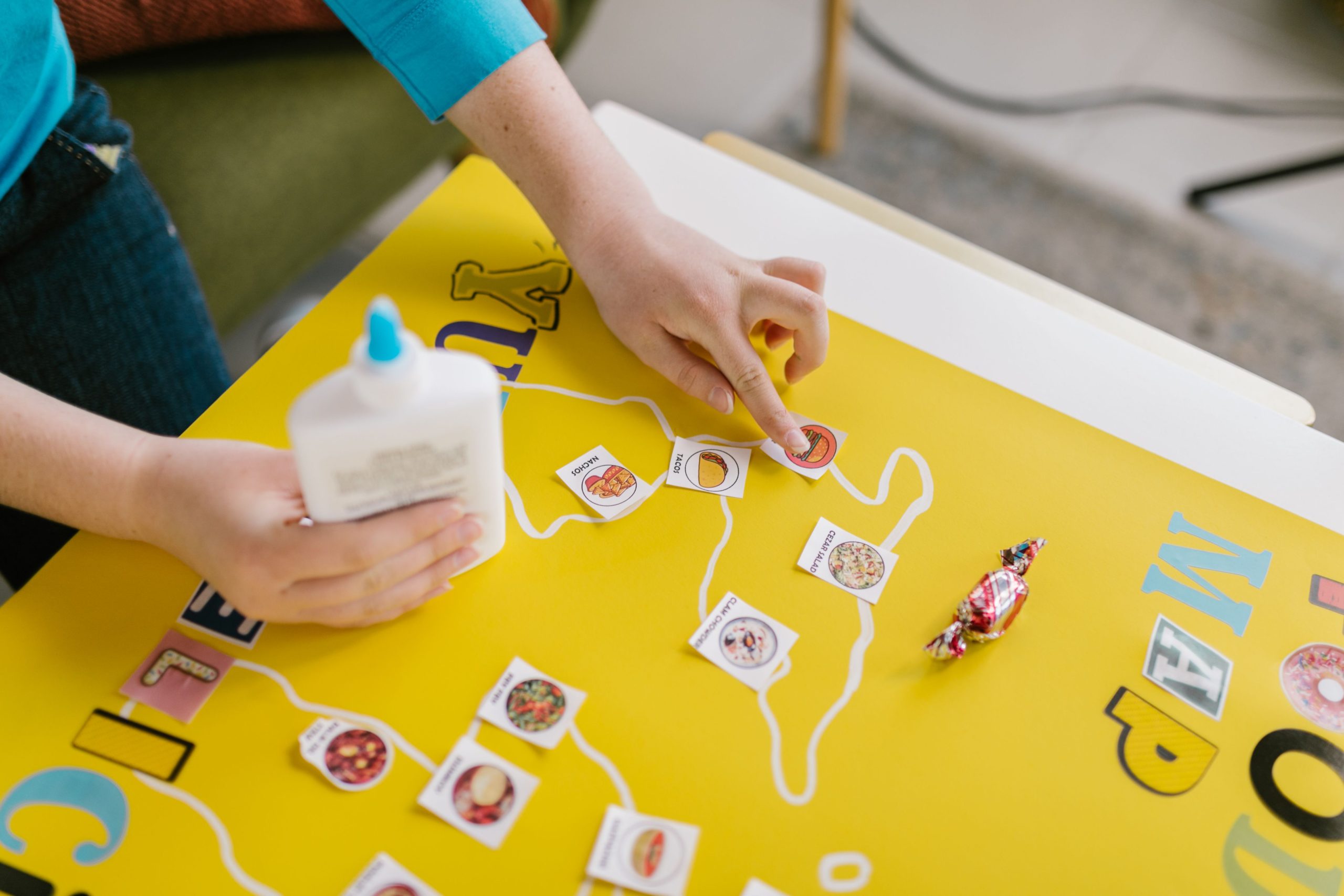
Imagine a visitor can make a repeating pattern from three sets of pre-cut paper shapes. Put a sample starter strip near the front, with two shapes laid out, and leave the finished example to one side. The sign can say to pick two shapes, repeat them on a strip and put the strip in a tray when done. Hand drawings next to the words let visitors compare the example with the materials without relying on colour alone.
Check what someone will do if they don’t want to make the whole strip. They could point to a shape that should come next, place one piece or watch one round. Agree those choices before the event so different helpers don’t set different expectations. At a mixed-language event, write the same instruction in short Bahasa Melayu and English if both are useful. Both versions should point to the same objects and describe the same finishing step.
Give each student helper one job they can hand over
One club member can point out the starting card, another can refill the shape trays with the teacher’s approval, and a third can keep completed work separate from unused paper. The person welcoming visitors does not have to assemble a strip for them. If a helper wants to demonstrate, show just the first move and return the material to its marked place. That way the next visitor still has a complete set.
Keep a small note beside the tray saying where spare pieces are and what to do when one kind runs out. For example, if triangles are finished, the helper can turn the starter card over to show a different two-shape example rather than ask every visitor to wait. Do not change the station location or add a spill-prone material without checking with the teacher. A useful handover changes one thing at a time instead of asking the replacement helper to remember a long explanation.
Run a two-minute test from the visitor’s side
Ask someone outside the club to approach the table with a clear path and no personal details on display. Let them speak or point to the action they would take first. If they point at the finished example and don’t realise there are pieces to choose, move the starter strip closer to the front. If they make the whole strip but cannot see where to leave it, label the tray and move it within the area the teacher approved. Test again with someone who did not see the first run.
At closing, note the point where the most people needed help and one change that reduced the confusion. Count requests for an explanation rather than collecting names or pictures. If the second example ran out just as quickly as the first, plan fewer shapes or restock earlier at the next carnival. The test is small on purpose: you want to know whether a new visitor can start and finish, and whether another pupil can keep the table running when the original helper steps away.