Use two science comic panels to infer what happened between them
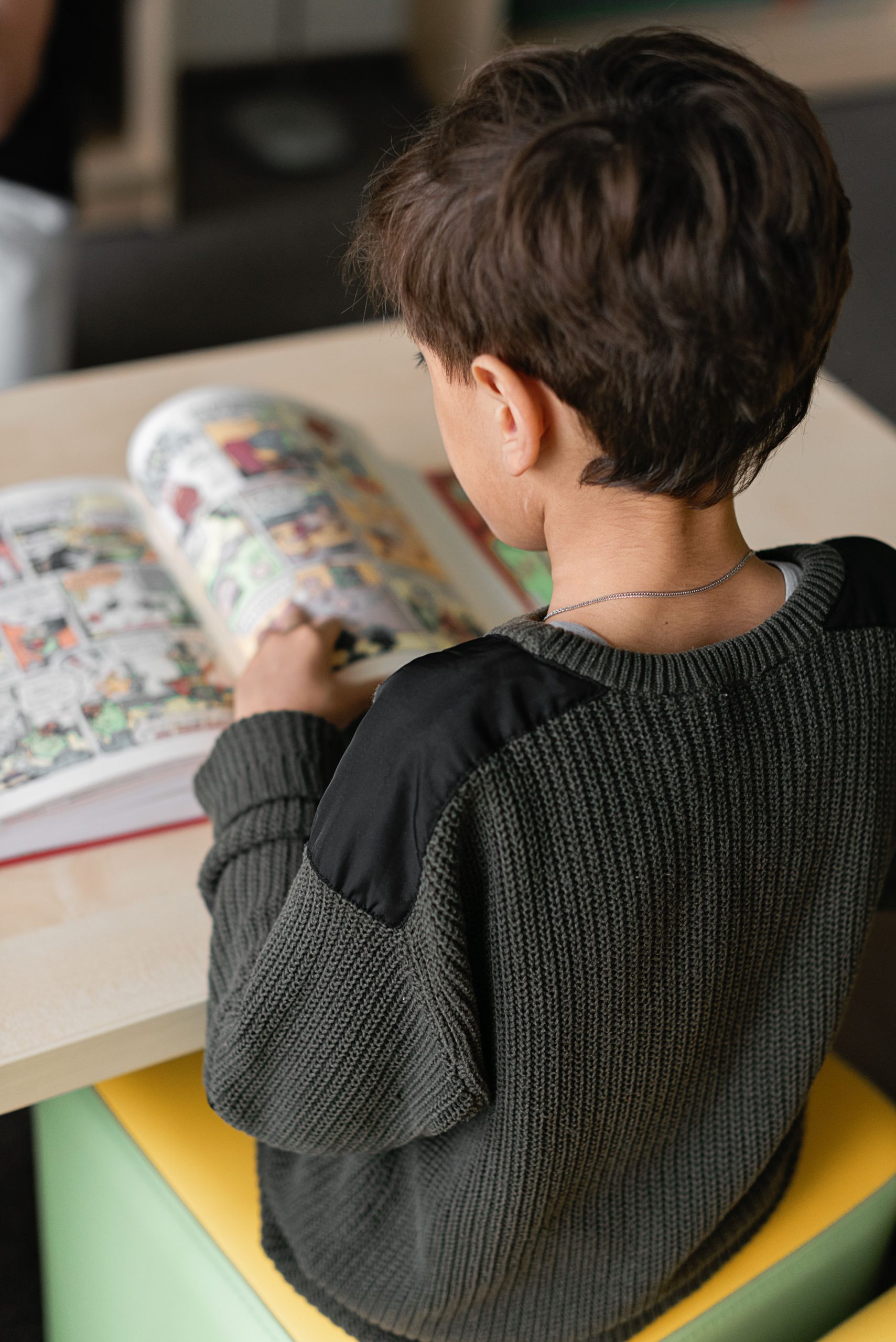
A child reads a science comic, points to a glass in the first panel and says the glass is wet in the second. The sequence may look clear, but saying what changed is not quite the same as explaining what happened in the gap. In a Malaysian primary reading group, try a short activity that uses pictures and speech bubbles together. The child does not have to read a whole comic or look up every word.
A publisher’s announcement carried by Malaysiakini describes science comics as one way to put scientific ideas in illustrated stories. That is a case of a publisher describing its materials, not independent evidence that any series improves reading. The activity below uses two invented panels and asks pupils to find useful clues without recommending a title or copying pages.
Draw two simple panels with one change
In the first panel, draw a dry, closed container on a table. Label it chilled. In the second, draw the same container with small drops on the outside. Show that it is still closed. Use a blank speech bubble or a short line such as “I haven’t opened it.” Pay attention to where the drops are drawn. If the picture looks as though they are inside the container, a reader may reach a different conclusion for a good reason. You can make the entire exercise on paper.
Start by asking a pupil to tell you what they can see and what the bubble says. They might say the container stays shut and its outside changes. For a family that speaks Bahasa Melayu or another language at home, let the child describe the pictures in that language before giving a short English explanation. A quick discussion about the evidence matters more than finding an exact English word immediately.
Separate the missing event from the visible change
Ask what might have happened after the first picture but before the second. A reader might think water spilled over the container, or that water vapour in the surrounding air became liquid on the cold surface. Ask which clue supports or weakens each suggestion. The picture showing a closed lid makes a spill from inside less likely in this invented example; it doesn’t show every event that could possibly happen off the page. If the author expects a single scientific explanation, the picture or text may need another clue.
Add a third line only if the first two panels don’t support the intended answer. One possible addition is a label showing that the tabletop around the container stayed dry. That does not prove the mechanism on its own, but it gives the reader another thing to consider. If a pupil doesn’t know the science idea yet, explain condensation briefly or ask the teacher for the relevant material. Don’t pretend the child can derive every scientific concept from a drawing.
Let the reader make an edit and check the result
Ask the child to add a caption or arrow that helps a new reader notice the most useful evidence. Then cover the first child’s explanation and show the cards to someone else. Which clue did that reader use? If they point to a different part, ask what they made of the closed lid or the position of the droplets. Use their answer to adjust one part of the picture instead of rewriting the whole story.
At the end, keep one sentence in a notebook: what changed, and what clue helped explain it? A later comic might show a different gap, such as a shadow shifting between two pictures. Start by naming the change again, then ask what the author actually shows. This routine can fit into a class reading corner or a few minutes at home. It keeps the fun of solving a small puzzle while giving the child a specific reason for a reading inference.