One bottle feels heavier than another, but does that make its liquid denser? Only if you are comparing the same volume of the two liquids and not accidentally including different containers. This Form 1 density experiment uses water and cooking oil to practise that comparison. The useful result is not simply that the oil forms an upper layer when poured into water. It is seeing whether your measurements could have predicted that result before the liquids met.
Measure the same volume of each liquid
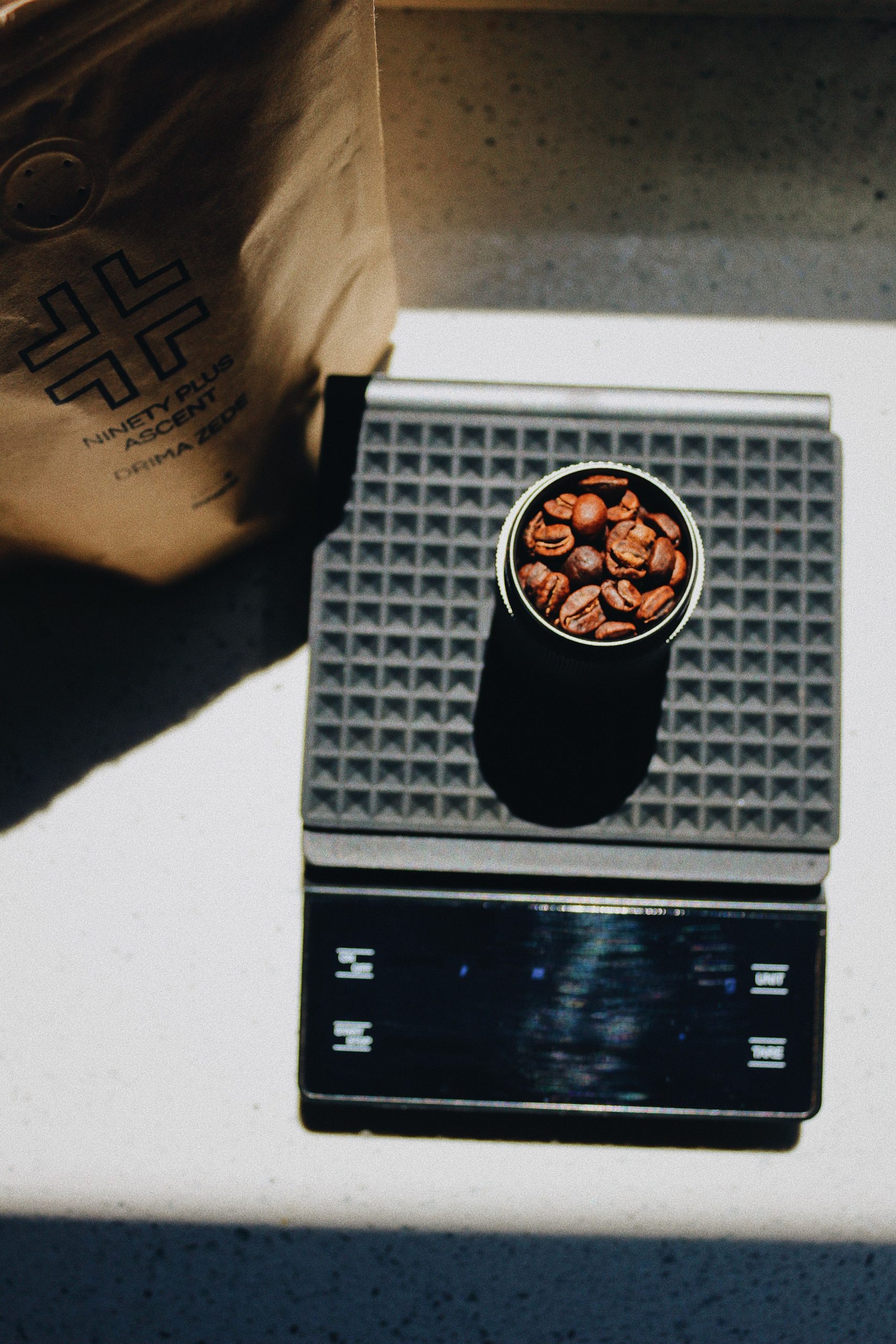
Find a kitchen scale that reads in grams, a small measuring jug or marked plastic cup, water, cooking oil and a cloth for spills. Do not use the liquids for cooking after the experiment. Set the scale on a firm, dry and level surface. Read the jug at eye level, not from above. Choose an easy mark, such as 100 millilitres, that your jug displays clearly. Roughly matching the height in two cups of different shapes is not a fair substitute for measuring the same volume.
First check what the empty dry jug weighs. Then measure 100 mL of water and place the jug on the scale. Subtract the empty jug’s mass from the reading to find the water’s mass. Alternatively, if the scale has a tare button, set it to zero with the empty jug already on it. In either case, note which method you chose. Water left inside the jug before the oil trial could change the mass reading, so empty and dry the jug thoroughly before the second measurement.
Turn mass and volume into a density
Suppose the empty jug reads 42 g, the jug with water reads 142 g, and the jug with cooking oil reads 134 g. Subtract 42 g in each case. The water has a mass of 100 g and the oil a mass of 92 g for the same 100 mL. Divide mass by volume to get 1.00 g/mL for the water and 0.92 g/mL for the oil. These are example readings, not values that every kitchen scale or type of oil will give. Record only as much precision as the measuring tools can support when you report your own results.
Check the units before you compare. A classmate might divide 92 by 100 and say the oil is 0.92 grams. That answer describes neither the mass in the jug nor the ratio. The unit is grams per millilitre. Another useful check is to imagine measuring 200 mL of the same oil. The mass would roughly double under the same conditions, but the density would not double, because the volume would double too.
Test the prediction with a small sample
Predict which liquid should be on top. Then place some water in a clear plastic cup and gently add a little oil. Wait for the liquids to settle. If you stir vigorously, small droplets can temporarily make the mixture look cloudy, so allow time before deciding what you see. The less dense oil forms the upper layer because these two liquids do not readily mix. The layering does not mean every pair of liquids with different densities will stay separate; some liquids mix rather than forming two lasting layers.
Explain a result that does not match the example
If your measured masses are nearly the same, look at the two volume readings, the scale resolution and any water left in the jug. Repeat before changing your conclusion. A good table records the empty mass, total mass, liquid mass and volume, so a classmate can see where a difference came from. Finish with one sentence comparing the densities and another identifying where the oil layer appeared. If the result surprises you, write the actual readings rather than the expected ones. An honest record gives you something to diagnose and improves the next attempt.
For an extra check, estimate what 50 mL would weigh before measuring it.